250 Years, One Table
On Wednesday, Tucson officially turns 250—a milestone marking the founding of Presidio San Agustín del Tucson in 1775.
Under the leadership of Hugo O’Connor, an Irishman serving the Spanish crown, the fortified settlement was built near the Santa Cruz River, on land long inhabited by Indigenous peoples.
But the story of Tucson’s food culture stretches far beyond that moment. It’s a tale of Indigenous ingenuity, Spanish influence, and desert resilience, simmering together for centuries before the city had a name.
Archaeological evidence shows the Hohokam and other Indigenous groups farmed the floodplains of the Santa Cruz Valley as early as 2100 BCE, making Tucson one of the oldest continuously inhabited and farmed regions in North America.
The Spanish arrived in the late 1600s, with Jesuit missionary Eusebio Francisco Kino founding Mission San Xavier del Bac in 1700. By the time the Presidio was built in 1775, the area was already a cultural crossroads—where Indigenous traditions, Spanish colonial influence, and desert ecology shaped daily life.
Tucson remained under Spanish control until 1821, when Mexico gained independence. It became part of the United States in 1854 through the Gadsden Purchase and was later named capital of the Arizona Territory from 1867-1877.
What was on the table in 1775?
When Spanish settlers arrived to build the Presidio, they didn’t come to an empty land—they joined a thriving food culture cultivated by the Tohono O’odham and other Indigenous peoples for thousands of years. The foods of Tucson’s early days were deeply tied to the rhythms of the desert:
Tepary beans – drought-resistant and protein-rich, a staple crop for Indigenous communities.
Mesquite pods – ground into flour for cakes and porridge.
Cholla buds – harvested and dried, then rehydrated for stews.
Prickly pear fruit – eaten fresh, fermented, or turned into syrup.
Squash, corn, and amaranth – grown in floodplain gardens and traded across regions.
Wild game and fish – including rabbit, quail, and fish from nearby rivers.
Spanish additions – wheat, sheep, goats, and cattle introduced new proteins and dairy.
Meals were cooked over open fires, in earthen ovens, or simmered in clay pots. Tortillas made from wheat or corn, roasted chiles, and stews thickened with squash or beans were common. Food was not just sustenance—it was ceremony, community, and survival.
There’s no better place to taste its legacy than Mission Garden—a living agricultural museum nestled at the foot of Sentinel Peak—reflecting chapters of Tucson’s culinary evolution: Hohokam and Tohono O’odham agriculture; Spanish colonial plots; Mexican and Chinese gardens; African American and Yoeme (Yaqui) traditions; and tomorrow’s garden. Its bounty is used by restaurants, shared with food banks, and sold at farmers markets.
If your bookshelf doesn’t include my friend Carolyn Niethammer’s “A Desert Feast: Celebrating Tucson’s Culinary Heritage,” it’s a must have. A richly illustrated journey through 4,000 years of food traditions in the Sonoran Desert, the award-winning writer blends storytelling, recipes, and profiles of local farmers and chefs, revealing how Indigenous, Spanish, Mexican, and immigrant influences shaped Tucson into America’s first UNESCO City of Gastronomy.
Check out the list of birthday celebration events and maybe enjoy a piece of cake on Wednesday.
Wishing you joy in the kitchen,
Michele
Mesquite-Rubbed Rabbit with Prickly Pear Glaze & Cholla Bud Succotash
Yield: 4 servings
A tribute to Tucson’s early culinary landscape, this dish blends wild game, desert botanicals, and heirloom crops into a rustic yet refined plate worthy of a 250th birthday celebration.
4 rabbit legs or substitute with chicken thighs
4 tablespoons mesquite flour
2 teaspoons ground chile, chiltepin or guajillo
2 teaspoon dried oregano
Salt to taste
2 tablespoon olive oil or rendered fat
Prickly Pear Glaze
1 cup prickly pear syrup or juice
2 tablespoons agave syrup or honey
1 tablespoon apple cider vinegar
1 teaspoon ground coriander
Pinch of cayenne pepper
Cholla Bud Succotash
1 cup cooked cholla buds, rehydrated if dried
1 cup corn kernels
1 cup cooked tepary beans
1 red bell pepper, diced
½ red onion, finely chopped
4 tablespoons olive oil, divided
Juice of 1 lime
Salt to taste
Freshly ground black pepper to taste
Fresh cilantro, rough chop, for garnish
Directions
1. In a medium bowl, mix flour, chile, oregano, 2 tablespoons oil, and salt. Pat rabbit legs dry and add to seasoning bowl, covering with seasoning. Cover with plastic wrap and marinate at least 30 minutes or overnight for deeper flavor.
2. Heat oven to 375°F. Heat 2 tablespoons oil in a skillet over medium-high heat. Sear rabbit until browned on both sides, then transfer to a baking dish.
Roast 25–30 minutes, or until internal temperature reaches 160°F.
3. Make glaze while rabbit cooks. In a small saucepan, combine prickly pear juice, agave syrup, vinegar, coriander, and cayenne. Simmer over medium heat until reduced by half and syrupy, about 10–12 minutes.
4. Brush glaze over roasted rabbit legs during the last 5 minutes of cooking, reserving some for plating.
5. Cook succotash. Heat oil in a skillet over medium heat. Sauté red onion and bell pepper until softened. Add corn, tepary beans, and cholla buds. Cook 5–7 minutes, stirring occasionally. Season with salt, pepper, and lime juice. Garnish with cilantro.
Note: Cholla buds and tepary beans are available at the San Xavier Co-op Farm, some Whole Foods, and sometimes through Amazon.
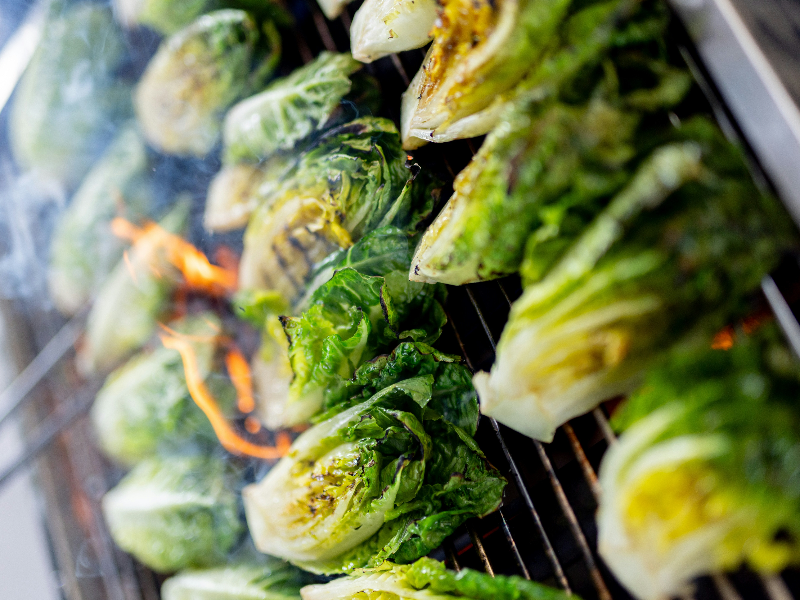
Romaine Calm and Grill On
Most of us know romaine lettuce as the crunchy hero of a Caesar salad, faithfully carrying
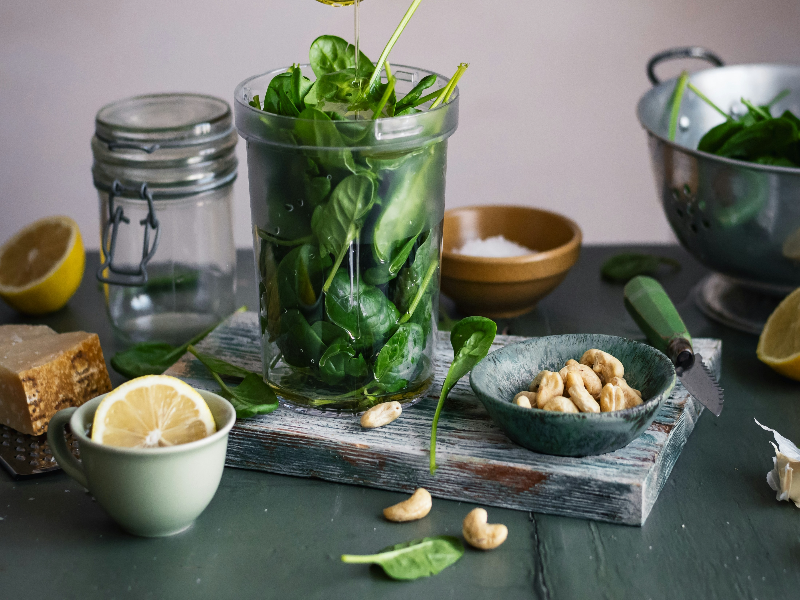
Dear Pesto, It’s Not You. It’s Me.
In July, a business trip took me to Baltimore and Washington, DC. From Baltimore’s Littl
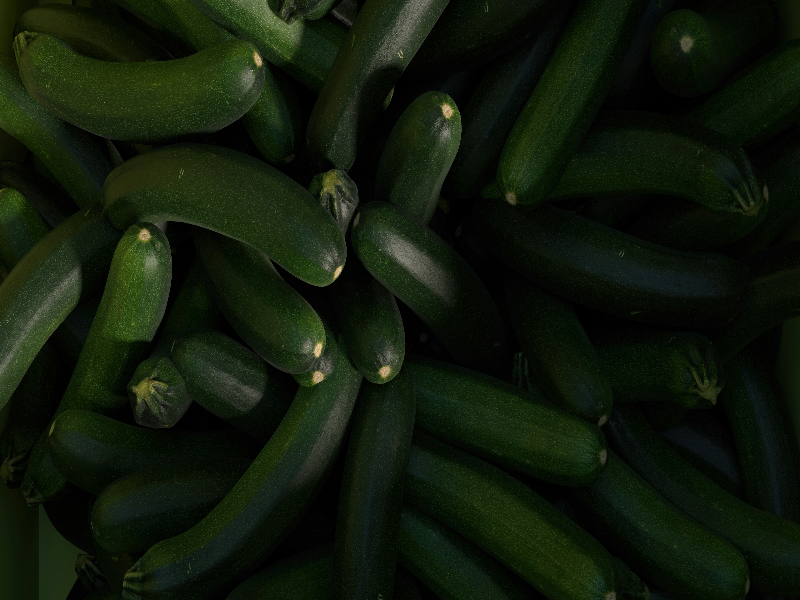
Zucchini: Nature’s Way of Testing Friendships
There are a few sure signs it’s summer in Tucson: triple-digit temperatures, monsoon clo