Latin Zest Meets Middle Eastern Magic
I love a meal in a bowl. It’s a symphony of flavors. What’s not to like about layers of deliciousness and various ways to eat them – from mixing it up, to single or multiple ingredients paired together?
It’s no wonder global fusion bowls are the hottest summer trend, keeping with what 2025 is all about: Bold flavors, sustainability, and health-conscious choices. They’re taking over menus because they’re fresh, vibrant, and endlessly customizable. And, for us home cooks, cleanup is a breeze.
Latin zest, meet Middle Eastern magic.
Latin American food is known for bright, bold flavors – citrusy marinades, smoky chilies, fresh herbs – while Middle Eastern cooking brings deep complexity through warming spices, aromatic blends, and rich sauces.
The combination of these two traditions results in a fusion that’s vibrant yet earthy, spicy yet balanced, and deeply satisfying. Latin America’s lime, and smoky paprika pair beautifully with Middle Eastern staples of sumac, cumin (also Latin American), harissa, and za’atar, creating layers of rich, tangy, and spicy depth.
Used across Latin America and the Middle East, cumin is one of the world’s oldest spices, originating in the Levant (the crossroads of civilization as the historical and geographical region along the eastern Mediterranean, encompassing modern-day Syria, Lebanon, Jordan, Israel, Palestine, and Cyprus) more than 8,000 years ago and was prized by ancient Egyptians for its culinary and medicinal properties. It’s a staple in both regions for its warm, slightly smoky essence.
Harissa, a fiery chili paste originating from Tunisia, was introduced to North African cuisine through the Columbian Exchange, when chili peppers arrived in the Maghreb during the Spanish occupation of Ottoman Tunisia (1535–1574). Its heat brings complexity, similar to Latin America’s love for chili-based sauces.
A Middle Eastern favorite for millennia, sumac is a tangy, lemony spice, often replacing citrus for brightness, as well as a preservative and vinegar substitute by ancient Egyptians. It blends seamlessly with the lime-forward flavors of Latin American cuisine.
Za’atar, in use also for millennia, originated in the Levant, where its blend of thyme, sumac, sesame seeds, and salt was prized for bold flavor, medicinal benefits, and cultural significance, appearing in ancient Egyptian texts and medieval Arabic medical writings. Its herby, nutty dimension complements Latin American ingredients of black beans and plantains found in today’s recipe.
Both Latin American and Middle Eastern cuisines share a love for slow cooking and fire-kissed flavors. Techniques like marinating proteins in citrus or yogurt ensure tenderness while enhancing depth when grilling over open flames or hot coals to develop smoky richness in dishes like shawarma (thin slices of traditionally lamb or mutton stacked in an inverted cone and slowly roasted on a vertical spit, shaved off, and served in flatbreads) and asado (developed by Argentinean cowboys as a way to cook meat over open flames using only salt to enhance its natural flavors). Both traditions also rely on slow-simmering stews, allowing spices to meld beautifully into hearty dishes like mole and tagine.
No classes to announce yet but stay tuned.
Wishing you joy in the kitchen,
Michele
Spice and Shine Fusion Bowl
Yield: 4 servings
Base
1 cup quinoa or jasmine rice
2 cups water
½ teaspoon salt
Protein
1 lb. chicken thighs, thinly sliced, or chickpeas for a plant-based option
1 tablespoon olive oil
1 teaspoon cumin
1 teaspoon smoked paprika
1 teaspoon harissa paste
½ teaspoon sumac
Juice of 1 lime
Salt & pepper to taste
Toppings
1 cup roasted plantains, sliced
½ cup black beans
½ cup cherry tomatoes, halved
¼ cup pickled onions
¼ cup feta cheese, optional
Pomegranate seeds
Sauce
2 tablespoons tahini
1 tablespoon lime juice
1 teaspoon za’atar
1 garlic clove, minced
3 tablespoons water, adjust for consistency
Pinch of salt
Directions
1. In a pot, bring water to a boil, add quinoa and salt, cover, and simmer for 15 minutes. Fluff with a fork and set aside.
2. Heat olive oil in a sauté pan over medium heat. Add chicken, cumin, smoked paprika, harissa, sumac, lime juice, salt, and pepper. Stir to combine and coat chicken. Cook until browned and cooked through, about 7–10 minutes. Set aside.
3. In a small bowl, whisk tahini, lime juice, za’atar, garlic, water, and salt until smooth. Adjust thickness if needed.
4. Divide quinoa, protein, and toppings into bowls. Drizzle with tahini-lime sauce; garnish with pomegranate seeds.
Note: Spices are available online or a shop selling Middle Eastern products.
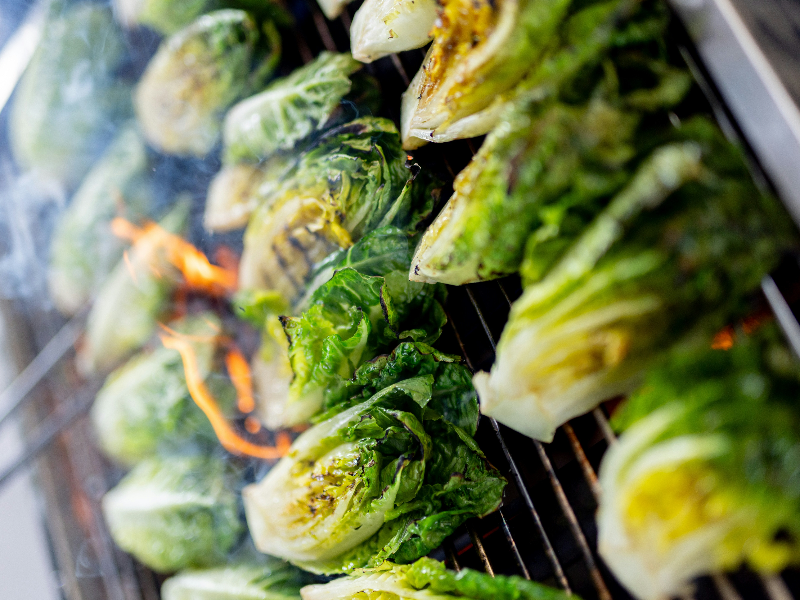
Romaine Calm and Grill On
Most of us know romaine lettuce as the crunchy hero of a Caesar salad, faithfully carrying
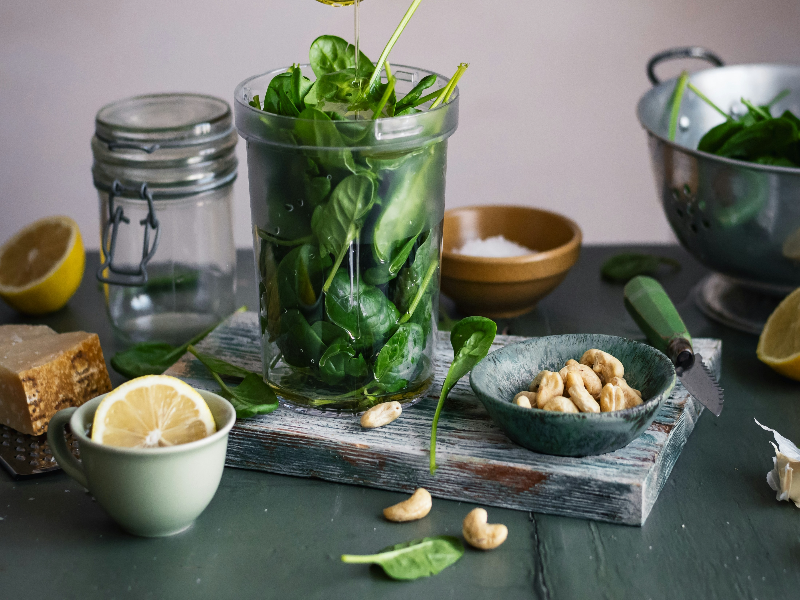
Dear Pesto, It’s Not You. It’s Me.
In July, a business trip took me to Baltimore and Washington, DC. From Baltimore’s Littl
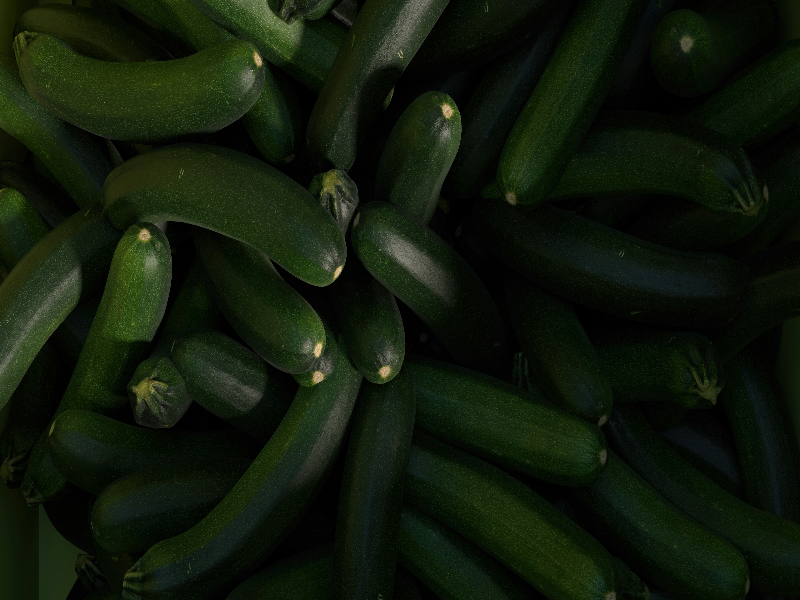
Zucchini: Nature’s Way of Testing Friendships
There are a few sure signs it’s summer in Tucson: triple-digit temperatures, monsoon clo